


Page 13
P. 13
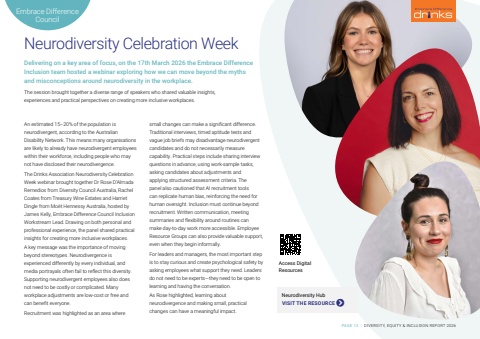
Embrace DifferenceCouncilPAGE 13 | DIVERSITY, EQUITY & INCLUSION REPORT 2026Neurodiversity Celebration WeekDelivering on a key area of focus, on the 17th March 2026 the Embrace Difference Inclusion team hosted a webinar exploring how we can move beyond the myths and misconceptions around neurodiversity in the workplace.The session brought together a diverse range of speakers who shared valuable insights, experiences and practical perspectives on creating more inclusive workplaces.An estimated 15%u201320% of the population is neurodivergent, according to the Australian Disability Network. This means many organisations are likely to already have neurodivergent employees within their workforce, including people who may not have disclosed their neurodivergence.The Drinks Association Neurodiversity Celebration Week webinar brought together Dr Rose D%u2019Almada Remedios from Diversity Council Australia, Rachel Coates from Treasury Wine Estates and Harriet Dingle from Mo%u00ebt Hennessy Australia, hosted by James Kelly, Embrace Difference Council Inclusion Workstream Lead. Drawing on both personal and professional experience, the panel shared practical insights for creating more inclusive workplaces.A key message was the importance of moving beyond stereotypes. Neurodivergence is experienced differently by every individual, and media portrayals often fail to reflect this diversity. Supporting neurodivergent employees also does not need to be costly or complicated. Many workplace adjustments are low-cost or free and can benefit everyone.Recruitment was highlighted as an area where small changes can make a significant difference. Traditional interviews, timed aptitude tests and vague job briefs may disadvantage neurodivergent candidates and do not necessarily measure capability. Practical steps include sharing interview questions in advance, using work-sample tasks, asking candidates about adjustments and applying structured assessment criteria. The panel also cautioned that AI recruitment tools can replicate human bias, reinforcing the need for human oversight. Inclusion must continue beyond recruitment. Written communication, meeting summaries and flexibility around routines can make day-to-day work more accessible. Employee Resource Groups can also provide valuable support, even when they begin informally.For leaders and managers, the most important step is to stay curious and create psychological safety by asking employees what support they need. Leaders do not need to be experts%u2014they need to be open to learning and having the conversation.As Rose highlighted, learning about neurodivergence and making small, practical changes can have a meaningful impact.Neurodiversity HubVISIT THE RESOURCE %uf138Access Digital Resources


