Most sustainability discussions in supply chain focus on transport emissions. However, for bulk wine logistics, sustainability extends beyond the journey itself to how materials are managed throughout their lifecycle.
A broader view of sustainability
As sustainability expectations continue to evolve, greater attention is being placed on what happens to logistics materials after delivery.
The wine industry increasingly expects suppliers to demonstrate responsible product stewardship through reducing material use, extending product lifecycles and diverting materials from landfill.
Integrating recovery, reuse and recycling into bulk logistics
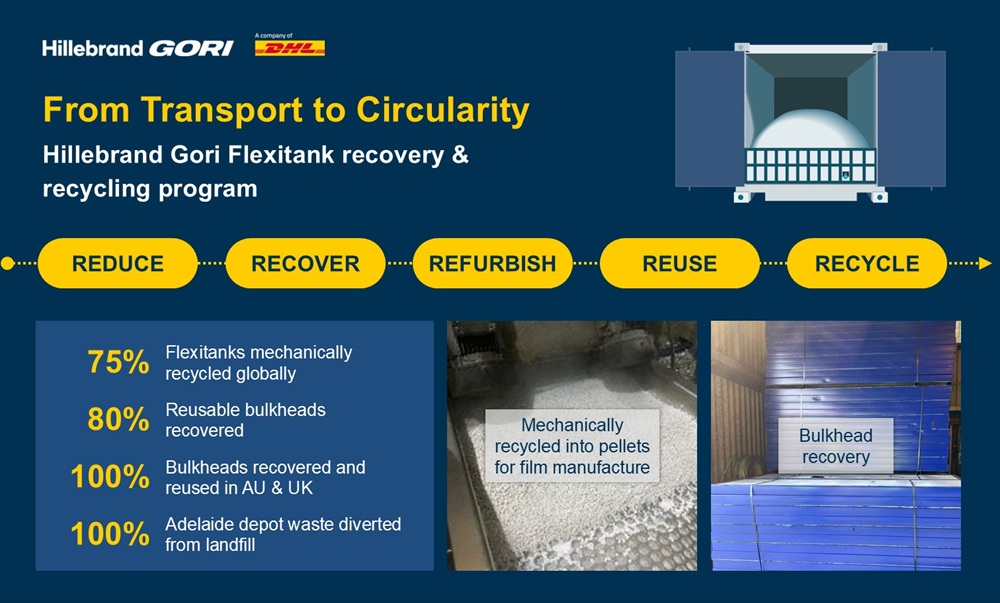
At Hillebrand Gori, this approach is built around five core principles: Reduce, Recover, Refurbish, Reuse and Recycle. This approach is embedded throughout the flexitank lifecycle, from design and manufacturing through to recovery, refurbishment and recycling after use.
Today, approximately 75% of Hillebrand Gori wine flexitanks are reported to be mechanically recycled globally, while around 80% of reusable bulkheads used in wine shipments are recovered for reuse. In both Australia and the UK, 100% of imported Hillebrand Gori bulkheads are recovered and reused. Through continued investment in recovery, reuse and recycling initiatives, Hillebrand Gori is supporting more resource-efficient supply chains through recovery and recycling initiatives.
Supported by in-house design and manufacturing, dedicated recovery programmes and recycling partnerships across multiple markets, Hillebrand Gori's end-to-end approach enables greater traceability and supports long-term recovery and reuse programmes for customers.
Local action, broader progress
Australia plays an important role in Hillebrand Gori's global sustainability strategy and serves as a strong example of how recovery and recycling initiatives can be embedded into day-to-day logistics operations.
In Adelaide, Hillebrand Gori works with approved recycling partners to recover flexitank materials and divert depot waste materials from landfill. Cardboard packaging, plastic materials and installation consumables are recycled or repurposed into alternative applications, including Process Engineered Fuel (PEF) and road base products. Imported flexitank materials are also mechanically recycled through approved recycling partners.
As a result, materials generated within the Adelaide fitting depot are now diverted from landfill and repurposed through approved recycling and recovery streams, helping increase material recovery and reuse across the supply chain.
Looking ahead
"The next phase of sustainability in bulk logistics is about looking beyond transportation efficiency alone," said Rintira Sutthitham, Hillebrand Gori Country Manager - Australia. "Customers increasingly want to understand the full lifecycle of the solutions they use. Recovery, reuse and recycling are becoming just as important as transport efficiency itself. By working together across the supply chain, we have an opportunity to advance recovery, reuse and recycling practices across the beverage logistics industry.
As sustainability expectations continue to grow, collaboration across the industry will be essential. The future of bulk logistics is not only about moving products efficiently, but also about building supply chains that increase resource recovery and reduce material waste.
Interested in learning more about Hillebrand Gori's Flexitank recovery and recycling initiatives? Visit the Flexitank recycling page or contact the Hillebrand Gori Australia team at aua-salesteam@hillebrandgori.com for more information.
Hillebrand Gori is a Silver Partner of the Drinks Association.