For years, the alcohol industry has been organised around categories: beer, wine, spirits and RTDs. Retail shelves are built this way. Supplier teams are built this way. Even many growth strategies are built this way.
Consumers increasingly aren't.
Today's drinker might have a beer at the pub, a canned RTD at a concert, wine with dinner and a cocktail on a Saturday night. They don't think in categories. They think in occasions.
This is the essence of category blurring.
Category blurring isn't the disappearance of categories. Beer, wine, spirits and RTDs remain enormously important. What is changing is how consumers move between them. Traditional category boundaries are becoming less relevant as consumers prioritise convenience, flavour, format and occasion over category loyalty.
Retail value is driven by cross-category buyers
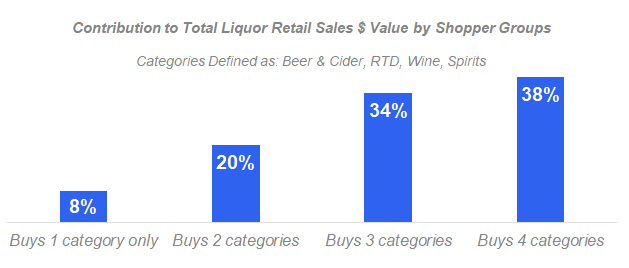
The majority of alcohol shoppers participate across multiple categories, challenging the traditional idea of a "beer drinker", "wine drinker" or "spirit drinker".
Category blurring comes to life in several ways.
First, through consumer behaviour itself. Drinkers are increasingly building broader repertoires and choosing different drinks for different occasions.
Second, through product innovation. Spritzes, flavoured spirits, fruity beer/radler, wine-based RTDs and cocktail-inspired drinks are all borrowing elements from multiple categories to recruit new consumers.
Third, through format innovation. Wine in cans, RTDs on tap, cocktails on tap and smaller pack formats are enabling categories to compete in occasions they traditionally couldn't access.
Growth comes from alternative propositions
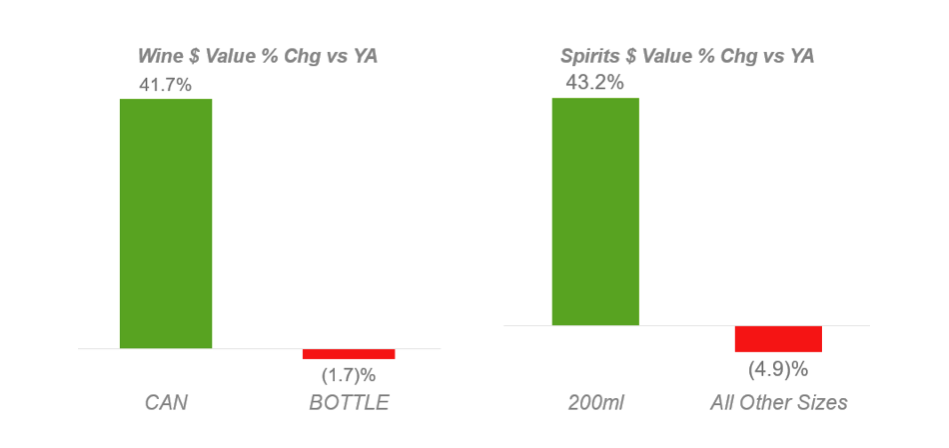
The implications are significant.
For brands and suppliers, the biggest competitor may no longer sit within the same category. Beer increasingly competes with RTDs. Wine competes with spritzes. Spirits compete with convenient ready-to-drink alternatives. Growth opportunities, and threats, can emerge from unexpected places.
For operators, category blurring creates opportunities to rethink menus, formats and serves. For retailers, it raises an important question: if consumers shop for occasions, should stores continue to merchandise purely by category?
Consumers increasingly open to cross-over innovation
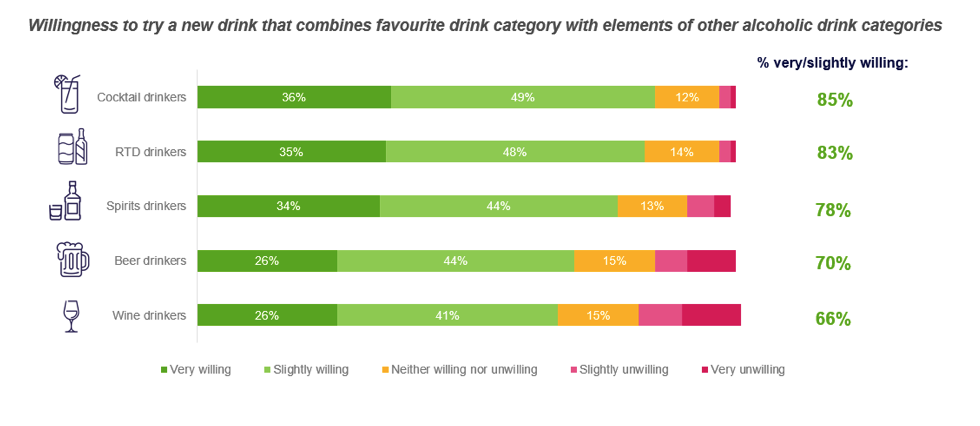
The brands that thrive over the next decade won't simply be those that defend their category. They'll be the ones that identify the occasions where they can win new consumers.
Because increasingly, growth isn't being won between categories.
It's being won between occasions through formats, packs, and serving rituals.
Join our upcoming webinar to gain a greater understanding of category blurring.
NIQ is a Platinum Partner of the Drinks Association.